

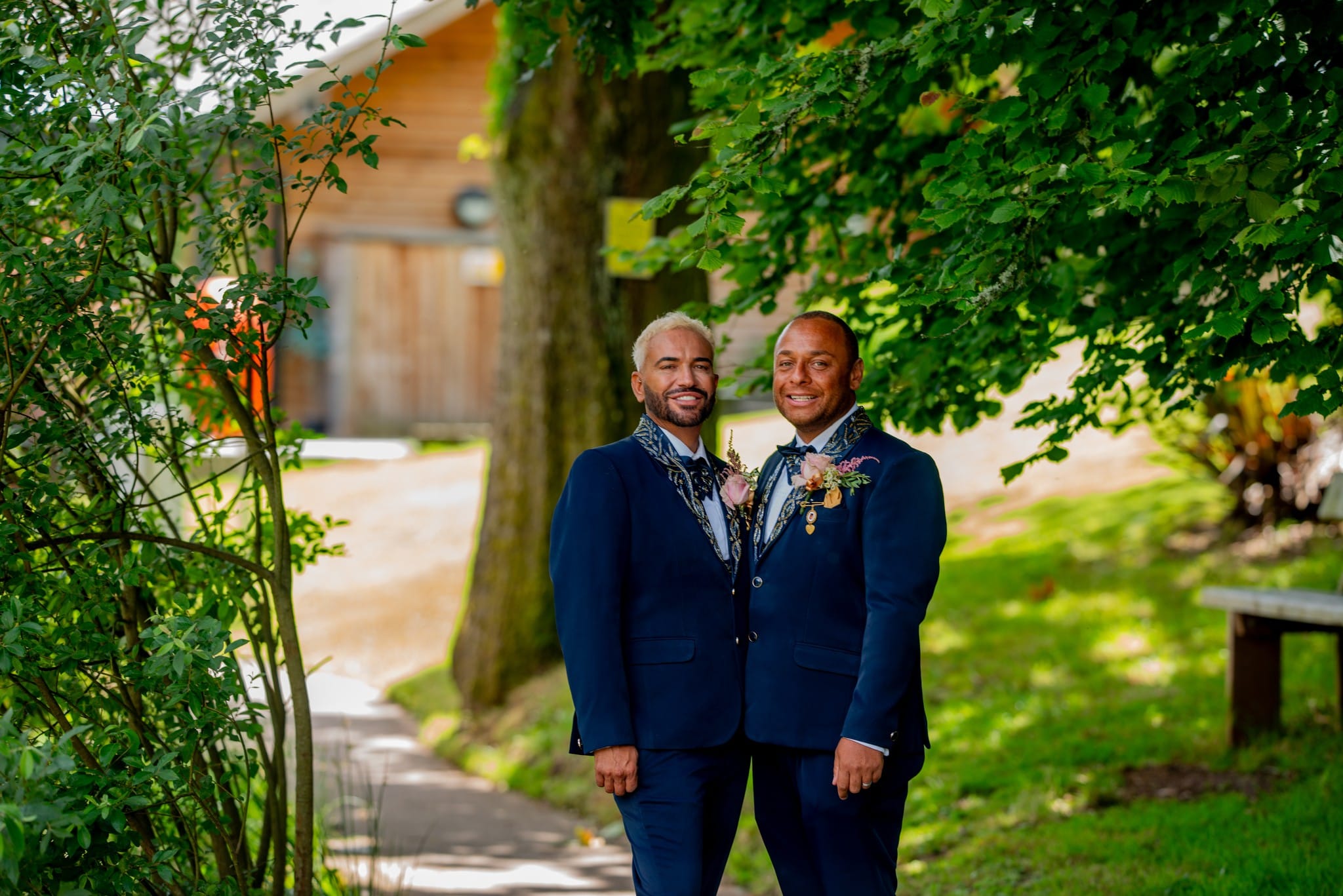
Dan Morgan-Williams, Founder of Visualise Training and Consultancy, discusses his personal experiences of coming out as gay and blind.
Coming out is a journey, not a single moment. For me, it began in two ways: first, as someone coming to terms with losing my sight due to retinitis pigmentosa; and second, as a young man beginning to understand, accept, and eventually embrace my identity as a gay person. Individually, these experiences can be isolating. Together, they created a complex, sometimes conflicting, sometimes empowering path.
I often joke that I had to come out twice – once as blind, and once as gay. If there were a third closet nearby, I probably would have lived in that too for a bit.
Growing up with a visual impairment meant learning early that the world wasn’t exactly designed with me in mind. School corridors, PE lessons, birthday parties… They were less ‘fun-filled childhood experiences’ and more ‘an obstacle course with bad lighting’.
People didn’t always know how to respond to someone who couldn’t read the board or catch a football—hint: I still can’t – but the assumptions started early. Add to that the quiet, unspoken realisation that I was also gay, and I had a double-whammy of ‘different’ before I was even a teenager.
At first, I did what many do – I buried it. My blindness was visible (ironically), but my sexuality? That I could try to hide. But hiding who you are is exhausting, especially when you’re already working twice as hard to navigate the world without sight. I knew I couldn’t keep doing both.
Coming out blind is a unique experience. You can’t see the reactions. You don’t get the raised eyebrow, the supportive smile, or the awkward shuffle. Instead, you rely on tone of voice, on silence, or on whether someone suddenly changes the subject to the weather. Spoiler: if someone starts talking about rain right after you say ‘I’m gay’, they’re probably not ready.
I’ve had people say things like, “Oh, I didn’t know blind people could be gay.” Which is right up there with, “You don’t look blind,” and, “You’re too well-dressed to be disabled.” Thanks, I guess?
But that’s the thing about intersectionality. It’s not just carrying two labels – it’s the way those identities overlap, and sometimes clash, in a world that prefers neat boxes. Being gay and blind doesn’t make me broken or brave – it just makes me, well, me.
And over time, I stopped apologising for that. I stopped trying to soften the truth of who I am to make others more comfortable.
Now, I own it. Fully. I’m blind. I’m gay. I’m confident. And if someone has a problem with that—honestly, that’s their issue, not mine.
I’ve done the hard work of accepting myself, and I’ve learned that I don’t need sight to have vision. I don’t need validation to have pride. And I don’t need to ‘pass’ as anything I’m not, just to fit in.
There’s still work to do – inside the LGBTQ+ community, in disability advocacy, and in how the world sees (or doesn’t see) people like me. But telling these stories matters. They open doors, start conversations, and let others know they’re not alone.
So yes, my story began with coming out. Twice. And with a few dodgy outfits along the way – don’t let anyone tell you blind people can’t clash colours.
🎧 Listen to my full coming out story podcast: https://creators.spotify.com/pod/profile/visualise/episodes/Coming-Out-A-Conversation-about-Sight-Loss-and-Sexuality-e2gbae6/a-ab0ppsp
To find out more about Visualise Training and Consultancy, visit https://visualisetrainingandconsultancy.com/