

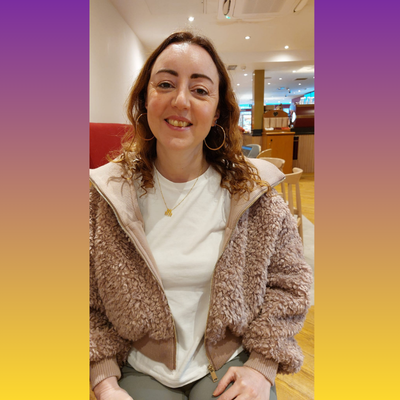
When I tell people I like running, I am nearly always asked what time I can run a 5k or how I got into running.
I was born a few months prematurely and experienced developmental delay, alongside infections and hospitalisations during my first year of life, so it’s fair to say I didn’t have an easy start to the world. My dad comes from Algeria, where walking and running are a way of life. Coming from a family on a low income, walking and running were a mode of transport, but also something my dad grew to enjoy. To share his love for running and help me build strength, my dad took me out running as soon as I was able to. I went from being a 1.5 kilo-newborn to running the Altrincham 10k with my dad at the age of seven. Running became something that I enjoyed doing with my dad and earned me the nickname at school, ‘Koriba Aribba! Andalé! Andalé! Speedy Gonzalez!’ even though I am not Mexican, but my maiden name is Koriba.
I confess I did not enjoy PE lessons. My only real sporting talent was running. I loved giving other sports a go, but I always felt that unless you had a talent for them, you weren’t really valued or recognised at school. As a teenager, I joined my local athletics’ club. I have the most precious memories from my time running with Warrington Athletics’ Club. Everyone was made to feel welcome, whatever their ability. You were encouraged, praised, and supported in a way that everyone should be. It gave me confidence. It made me feel good.
In my later teenage years, I started to experience pain in my joints and felt generally unwell. After a few years of being dismissed by my GP and other healthcare professionals, including an ENT Consultant who claimed that ‘young girls just have these things; it’s stress,’ my right knee swelled up to the size of a balloon and I could no longer be ignored. A few scans, X-rays, and blood tests later confirmed that I did, in fact, have seronegative rheumatoid arthritis. I have had my knee aspirated and injected many times. I have tried every anti-inflammatory available and have settled on a DMARD, which for the most part, keeps my condition reasonably stable.
Moving from being a fit and active young person to a young person who couldn’t walk without walking aids for a period of time was a huge life change and learning curve for me. I remember being told how I couldn’t do this or I couldn’t do that. It felt like I was being told I just couldn’t do very much, including finishing my degree. When I flipped this mindset to thinking about what I could do instead, it changed everything. I finished my degree and went on to do a Masters. During this time, I started my journey back into sport by learning to walk again without walking aids. Once I was walking independently, I tried other activities that were low impact, such as pilates, yoga, and belly dancing. The year after I was able to walk again, I performed in a belly dance group show at my university.
For about twenty years, I focussed on doing low-impact activities. Following the pandemic and a difficult maternity leave recovering from Covid-19 as a shielding patient, I experienced an emotional traumatic event, which led to me developing fibromyalgia. I remember leaving my appointment with my rheumatologist in tears on the phone to my mum. It felt harsh. Another diagnosis, another condition to understand and manage, but every cloud has a silver lining.
The treatment for fibromyalgia is cardiovascular exercise. My immediate thoughts went to running. My rheumatologist referred me for rheumatology physiotherapy. I had never stopped loving running. I still watched every race under the sun on TV and I was elated to be told by a rheumatology physiotherapist that of course, she could get me running again and indeed, she got me running again.
Running with two long-term conditions and physical disabilities is quite different. I’ve learnt to make sure I warm up and cool down very well. Even forgetting to warm up an ankle or pushing too hard in a run has its consequences. I have also learnt to enjoy the periods of remission, where I can enjoy running without flare-ups, but to accept that there will be weeks or months when I won’t be able to run. This is where cross-training helps. I do physiotherapy exercises, yoga, and have recently started going swimming, followed by a session in the steam room and sauna. There are other days when just walking is best for my joints and pain levels, or even just taking a pause and having a ‘rest day.’ The key is to find a way for movement into my daily routine, however that looks.
In answer to questions about my speed and running times, the only answer I can give is, ‘I don’t know.’ I would say it depends on ‘my season.’ My Strava 1k best time goes from 4 to 8 minutes/kilometre, but in truth, I just really care about being able to run. When I can’t run, I’ll be honest, I’m envious of other runners I see out running and wish I could be there with them. Having health conditions makes you appreciate your health and being able to do the things you enjoy. I’m also deaf and specifically got hearing aids with Bluetooth functionality, not just to help me hear people on the other end of the phone, but so I can listen to music when out running.
For me, running isn’t about the pace. Running isn’t about the race. It is so much more. Movement is medicine. Running keeps you physically fit. Running quietens the mind. Running builds strength and resilience. Running gives you a sense of accomplishment. Running is simply the best.
Nadia Bousseau
Follow my running journey on Instagram: @runningwithnadia