

Jodie Ounsley tells Ability Today why accessible communication, clear information and listening to participants can help more disabled women and girls take part in sport.
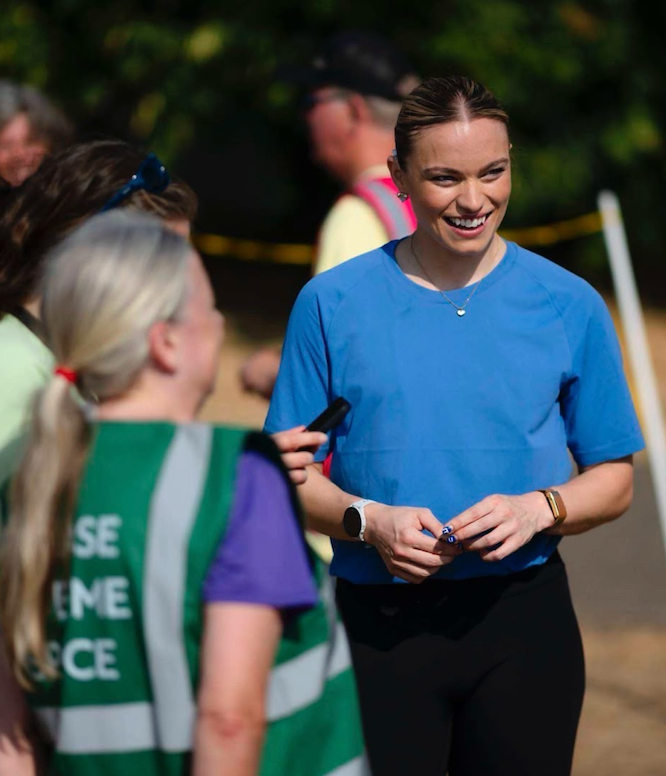
Jodie Ounsley has called for sports organisations to make simple, practical changes so disabled people can take part on equal terms.
Speaking to Ability Today, she said accessible communication and clear information can make the difference between somebody joining an activity and staying at home.
Her comments come as Specsavers and parkrun begin rolling out the StartLine initiative, which will provide accessibility packs to 100 participating events across the UK. The packs include visual course maps, briefing whiteboards, guide tethers and high visibility bibs.
Jodie said the initiative recognises that the greatest obstacle may appear before a participant reaches the start line. An unfamiliar setting, uncertainty about available support and a lack of accessible information can all undermine a person’s confidence.
“Having information available beforehand is really important,” she said. “Knowing what to expect, where to go and what support is available can take away a lot of anxiety.”
Access to the same information
Jodie knows from her own sporting career how much inclusive communication matters. While playing rugby at the highest level, she has relied on lip reading, body language and visual cues in a game where instructions are often delivered verbally and at speed.
“The biggest challenge wasn’t being deaf itself, but making sure I could access the same information as everyone else,” she said.
Coaches, teammates and support staff helped by maintaining eye contact, checking that information had beenunderstood and sharing instructions visually. Jodie described the most effective support as practical and collaborative.
“What matters most is asking someone what they need rather than assuming,” she said.
Her experience also shows how sport can build confidence. At school, Jodie was shy and lacked confidence around herdeafness, but being active and part of a team gave her a sense of purpose.
“Sport was always the place where I felt I belonged,” she said. “Even when I faced challenges, I loved the feeling of beingactive and being part of a team, and that made me want to keep pushing myself and finding ways to make it work.”
As a deaf woman in sport, Jodie sometimes felt she had to work harder or find different ways to succeed. Each achievement strengthened her confidence.
“The more I challenged myself and achieved things I wasn’t sure I could do, the more belief I gained in myself,” she said.
How StartLine aims to remove barriers
Disabled sportswomen are often described as inspirational. Jodie said she appreciates that people may be encouraged by an athlete’s story, but warned that praise should not distract from the barriers organisations still need to address.
“Often the things that make the biggest difference are actually quite simple, like better communication, visual information or other small adjustments that make environments more accessible,” she said.
“The focus should be on making sure everyone has the opportunity to take part and feels welcome, rather than expecting individuals to overcome every barrier on their own.”
She saw the effect of the StartLine resources during her time at parkrun. Visual maps and whiteboards gave her greater confidence as a deaf participant. She said guide runners, tethers and high visibility bibs could have a similar impact for somebody with a visual impairment.
“They may seem like small changes, but from my time at parkrun, I saw them make an impact in real time,” she said.
The next step, she added, is to continue listening to participants and adapt the support in response to their experiences.
Why choice and independence matter
Jodie said organisers should make support visible and easy to access without singling people out or taking away theirindependence. The starting point should always be to ask what an individual wants.
“Every person’s experience is different, and what works for one person may not work for another,” she said. “It’s about empowering people to take part in a way that works for them.”
She believes the success of StartLine should be judged by more than attendance figures. Organisers should also consider whether people feel welcome, whether they have the confidence to return and whether accessibility becomes a routine part of each event.
Her final message to disabled women and girls who are considering a new sport is not to underestimate themselves.
“Confidence can often be the hardest hurdle, but sport can give you so much in return,” she said. “You don’t have to be the fastest or the strongest. Just showing up is a huge achievement.”
“Try not to focus on what other people might think and focus instead on how sport makes you feel. You might surprise yourself with what you’re capable of.”
By Stephanie Penney Jones – Academy Diploma Alumni