

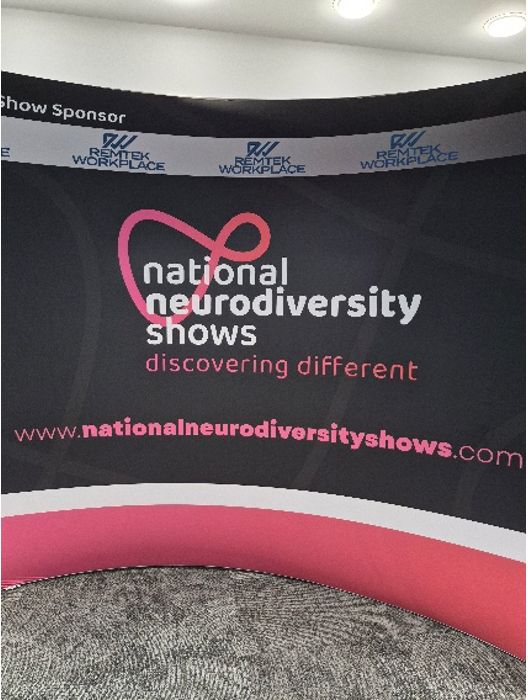
When the National Neurodiversity Show Midlands returned to the Coventry Building Society Arena on 14 July 2026, it arrived as more than another date on the exhibitions calendar. For six hours, the venue became a meeting point for families seeking answers, professionals looking for better practice, organisations offering support, and neurodivergent people wanting to be seen on their own terms.
Running from 10am to 4pm, the Coventry event formed part of a national programme that had grown quickly after earlier shows in Cardiff, Liverpool and the Midlands. Organisers billed the National Neurodiversity Show as the UK’s largest exhibition dedicated to neurodiversity, and the 2026 Midlands edition positioned itself as both a practical resource fair and a public statement about inclusion. The draw was not simply scale. The most compelling part of the day was its seminar programme, with visitor tickets offering access to sessions across three dedicated rooms. That format mattered. Neurodiversity did not sit neatly in one category: it touched education, employment, health, family life, mental wellbeing, law and identity. A rolling programme gave visitors the chance to build their own route through the day rather than being funnelled into a single version of the conversation.
Among the listed sessions was a talk from Matt Taylor, Deputy Assessor Manager at Access2Learn, on emotionally based school avoidance. It was a subject that had moved from specialist discussion into mainstream concern as more families and schools confronted the reality of pupils who were not refusing education so much as finding the system impossible to tolerate. The session’s emphasis on emotional and traumatic experiences, inclusive support systems and practical EBSA-informed strategies made it one of the day’s most useful contributions for parents, teachers, SENCOs and alternative provision teams. In a different register, Anita Davies’ “Harnessing Your ADHD Brain” struck the more affirming tone that neurodiversity events increasingly aim to capture. Rather than treating ADHD only as a list of impairments, the session framed difference as something to understand, work with and, where possible, use well. That shift—from deficit to practical self-knowledge—helped explain why events like this have gained traction.
The wider seminar themes broadened the agenda further. SEN law, neurodivergent nutrition, financial planning for SEN families, mental wellbeing, coping techniques and sensory-friendly skincare all suggested a programme that understood neurodivergence as part of daily life, not a topic confined to diagnosis or school support. That range was one of the event’s strengths. A visitor might have arrived with a question about attendance, assessment or behaviour and left with information about legal rights, money, wellbeing or sensory needs.
Beyond the seminar rooms, the exhibition floor provided the day’s busiest backdrop. The Coventry show was promoted as a space filled with organisations offering advice, services, products and support tailored to neurodivergent people and their families. In practice, that floor was where the event proved its worth. It was one thing to hear broad messages about inclusion; it was another to stand in front of a provider, charity or specialist organisation and ask a specific question about a child, a workplace, an assessment pathway or a sensory need. The organisations involved covered a wide field, from support groups and advocacy bodies to product suppliers and assessment services. Assessment and support providers such as ADHD Certify and Autism Detect had promoted their presence at the Coventry show, highlighting the demand for clearer routes through ADHD and autism assessment and post-diagnosis support. For many visitors, especially those at the start of the process, those conversations were as valuable as any formal presentation.
The challenge for any neurodiversity event was that the very features that made exhibitions useful—crowds, stands, noise, choice and constant conversation—could also make them difficult. The Coventry show appeared to acknowledge that tension. Quiet rooms, breakout areas, device charging and an exhibition café were all listed among the visitor features. These were not minor extras. For some attendees, a quiet place to reset or somewhere to pause between sessions may have determined whether the day felt accessible or exhausting. The Coventry Building Society Arena also gave the event a practical advantage. It was a large, familiar venue with on-site parking, accessible parking provision and published arrival information directing visitors through the South Entrance and West Stand registration area. Coventry’s central Midlands location made the show reachable for visitors from across the region, while national rail and road links broadened its potential audience.
What made the show interesting was the mix of people it brought together. Parents, carers, teachers, employers, clinicians, advocates and neurodivergent adults are not always in the same room, and when they are, the conversation can easily become professionalised or overly clinical. At its best, this event allowed lived experience to sit alongside expertise, and practical support to sit alongside broader debate about what genuine inclusion looks like. There were risks, and some were familiar to any large exhibition. A packed floor could feel dynamic, but it could also overwhelm. A seminar programme could look impressive on paper, but only succeeded when timings were clear and rooms were easy to find. The promise of unlimited access needed to be matched by good organisation, visible signage and staff who understood the audience they were welcoming. At an event built around accessibility, the details mattered as much as the headline speakers.
Still, the National Neurodiversity Show Midlands 2026 offered something increasingly necessary: a public, practical and affirming space for neurodiversity in everyday life. The Coventry edition delivered its strongest moments through its seminar programme, its busy exhibition floor and its visible attention to accessibility. More than a useful day out, it felt like a snapshot of a wider movement—one that is moving neurodiversity from the margins of policy and provision into the centre of public conversation.
By Kayleigh Northall – Academy for Disabled Journalists Alumni
Read more about Kayleigh Northall