

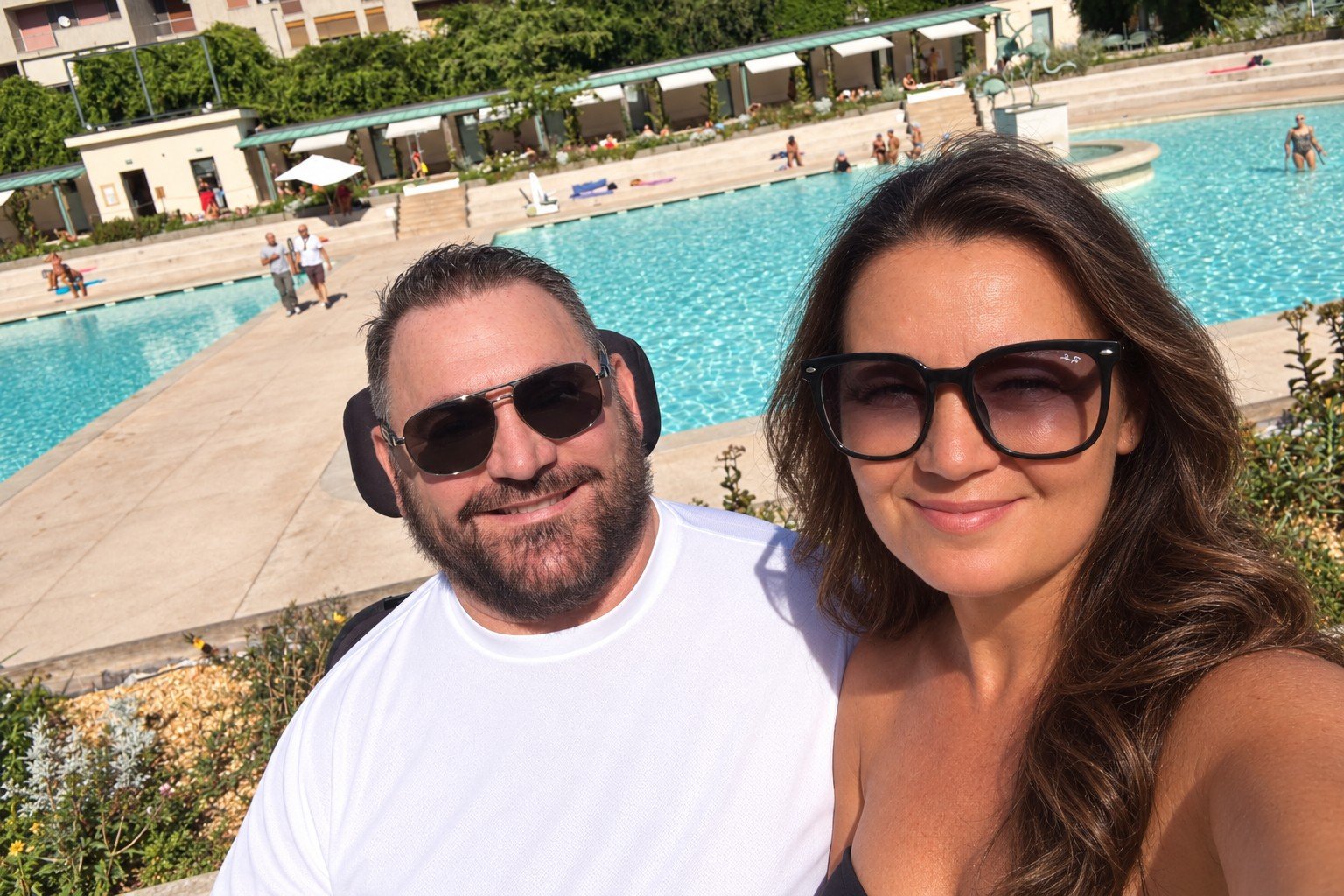
For almost four decades, other people have helped me with things most adults do without thinking: getting out of bed, washing, dressing, moving safely and managing parts of everyday life. I live with tetraplegia after a cervical spinal cord injury at seventeen, and I cannot use my hands in the ordinary way needed to write, type or manage many physical tasks independently.
That dependence is real. But it has never meant that somebody else should automatically become the author of my decisions.
The distinction became clear very early.
After rehabilitation, I expected to return home to Milan. My parents were frightened because nobody had properly taught them how to care for a son with tetraplegia. The bathroom needed adapting, barriers had to be removed and almost every routine had to be relearned. For a short period I was sent instead to a residential facility in Viserbella di Rimini.
I understood almost immediately that I did not want my life to become a room and a corridor.
I did not yet know how every practical problem would be solved. I could not physically remove a barrier, adapt a bathroom or transfer myself from bed to wheelchair. But I could make a decision about where I wanted to live. After two days, I returned home. My parents and I learned together.
That experience still shapes the way I understand autonomy.
Autonomy is often confused with self-sufficiency. I think they are different. Self-sufficiency asks: “How much can you do alone?” Autonomy asks: “Who decides?”
A person may need extensive assistance and still make decisions about relationships, family, work, travel, writing, risk, privacy and ordinary daily preferences. Support should make those decisions possible, not quietly absorb them.
This is why I am cautious whenever disability is discussed through slogans such as “where there’s a will, there’s a way” or “if you really want something, you can do it.” Wanting and being able to make something happen are not the same thing.
I can want to enter a building. If there are steps and no accessible entrance, my determination does not create a ramp.
I can want to take a train. If the assistance system fails, my motivation does not put me on board.
I can want to work, travel or participate in public life. If the service, technology or environment is inaccessible, part of the power to make that choice real belongs to institutions, companies and the people responsible for removing those barriers.
Personal responsibility matters, but only inside the space where genuine options exist.
This is also why the verb “choose” has become so important to me.
I cannot choose what happened to my body at seventeen. Nobody chooses an unexpected injury, illness, bereavement or many of the events that alter a life. I can, however, make choices about what remains within reach: whether to ask for help, whether to try a different route, whether to rebuild a relationship, whether to write, whether to speak, and where to direct my thoughts after the first impact of something painful.
Choice is not a magic word. It does not remove grief, fear or frustration. I have cried, been discouraged and had periods when I could not see a solution. I do not believe people should be blamed for circumstances they cannot control.
But where a real choice exists, protecting it matters.
Care relationships make this especially visible.
My mother cared for our family long before she ever had to care for me physically. After my injury, much of her life began to revolve around my needs. Years later, I told her that I did not want her love for me to mean surrendering her own life. I still needed assistance, but I wanted her to remain more than my caregiver.
That conversation was painful because neither of us was rejecting the other. We were trying to protect two lives at once.
The best assistance I have received has never been assistance that simply did the most for me. It has been assistance that understood the difference between helping my body and replacing my judgment.
Technology can work the same way.
Because I cannot use my hands normally, I write through voice dictation and assistive technology. My memories, experiences, arguments and words come from me; technology gives my voice access to the written page. For another writer, hands may be the physical route from thought to text. For me, voice is that route.
That is not a small distinction. Accessibility is not about giving somebody a special advantage. It is about making sure the route between intention and participation exists.
Nearly forty years after my injury, I no longer measure independence by how many tasks I can complete without another person.
I measure it differently.
Can I still decide what kind of life I want?
Can I express disagreement?
Can I change my mind?
Can I ask for help without surrendering authority?
Can the systems around me turn a legitimate choice into a practical possibility?
Those questions are more useful to me than asking whether I can do everything alone.
Dependence is sometimes unavoidable. Loss of agency should not be.
by Massimo Lorusso
About the author:
Massimo Lorusso is an Italian author based in Milan. He has lived with tetraplegia since 1988 and has been writing since 1993. His autobiography, “The Voice of Silence – What Words Do Not Say”, explores family, autonomy, assistance, loss and personal choice across nearly four decades.