

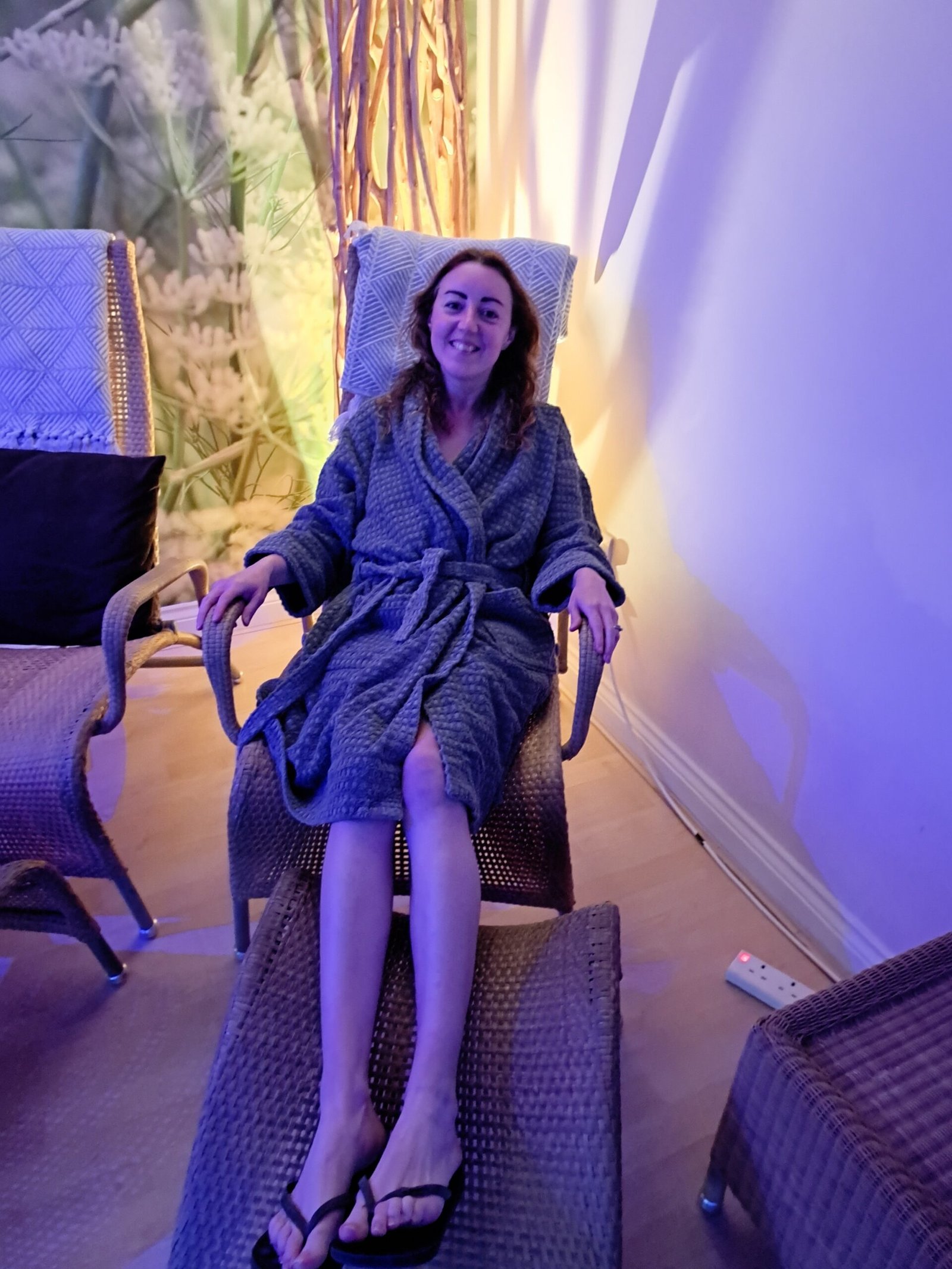
The mind and body are intrinsically linked. The body has a wonderful way of telling us when to rest and slow down when we start ignoring our mind’s voice when it keeps telling us we are tired. Last year, I experienced a bad flare-up of my arthritis and required a steroid injection. Then, earlier this year, I was admitted to hospital for the first time with a severe flare-up of my fibromyalgia.
So, why should I care?
We’ve all heard the saying, “Health is wealth.” Without our health, it is difficult for anyone to just simply function. My lovely mum and dad could see I was struggling, and booked me a spa break with my mum.
It was only at the hotel when I really realised just how tired and how much in need of a rest I was. I know I’m not alone when I say we’re all guilty of putting everyone first and ourselves last when it comes to self-care.
There’s always this ‘tug and pull’ between wanting to be a good friend, colleague, or parent, and wanting to just be quiet and rest. It can feel selfish putting your needs above someone else’s, especially when someone close to you is in a crisis, but what happens when we keep emptying our cup until it’s empty and we reach our own crisis point?
Self-care isn’t selfish. Self-care is vital. Self-care needs to be felt, lived, and breathed in our daily lives in the same way that we need to eat, drink, rest, and sleep to survive.
The beauty of self-care is that it is about you and it is your choice. You get to decide what self-care means to you and when is the best time for you to focus on your own health and well-being.
As a parent carer living with long-term conditions and disabilities, self-care is a must. For those in need a bit of help in looking at what self-care can look like and how to build this into your routine, here are my five top tips on how you can make self-care a part of your daily life:
1. Be mindful of your mental health.
We’ve all said it: “I’m starting to lose my mind!” This a good tell-tale sign that we need to take a power pause, rest, and reset. It’s about getting your mind in the right headspace from the beginning. I purposely get up early, so I can take my time making my breakfast and getting my lunch ready. I often listen to a short meditation or just take some breaths before I have my breakfast. This little self-care routine allows me to set a calm tone at the start of the day. At night, I put my phone down and read a book or listen to a meditation. I attend a weekly yoga class. I must admit that I get my best night’s sleep after this class. Doing crosswords, sudoku, mindful colouring, and similar activities are a wonderful way to switch off and connect with your mind in a relaxing, fun way. Journaling can also be helpful in working through your thoughts and helping you to remain positive. It can be hard to lose sight of all our blessings when it feels like everything is all going wrong, but there is always a light, however dim, at the end of the tunnel.
2. Movement is medicine.
I have always loved running and dance. I love how movement makes me feel. I love nothing more than running and a good yoga flow. Movement doesn’t have to mean extreme sports. Walking is one of the best ways to keep fit and great for your mental health, too. My advice would be to try different activities. Eventually, you will find that one activity that you keep coming back to and really miss when you’re poorly.
3. The digital detox.
I have social media free days. It’s easy to lose your time in scrolling and then start comparing yourself to other people. I make a conscious effort to use social media as a ‘take-away tool’ and not like a ‘comparison website.’ I use it to generate ideas and take tips from other people on how to stay healthy, learn new skills and facts about topics that interest me. I enjoy posting about my passion for running as a runner with disabilities from my Instagram account @runningwithnadia to share my running journey, share tips, and just bring joy to other people. While I love social media and its benefits, I also love having some ‘me time’ away from the digital world to be in my own world.
4. You are what you eat.
As someone living with an autoimmune condition, I know that if I overindulge in sweet foods, I feel the inflammation in my body and it can trigger flare-ups. I keep to a healthy well-balanced diet, but I don’t deny myself a piece of cake or chocolate. It’s about taking care of your body, but also enjoying those little pleasures in life.
5. Surrounding yourself with good friends and family.
I am really blessed to have a lovely family and friends. I have a day out with my mum every week. I always look forward to it and know she does, too. My husband, children and I usually meet up with friends socially most weekends, whether it’s a BBQ at a friend’s house or a walk in the park. Social connections have long been a major factor in boosting your mental health and longevity. As a human race of people, I don’t think we were ever meant to be alone, but to be part of a community supporting and looking after one another.
So, why should you care about self-care? Because you matter and the world is always a better place with you in it. To you, you may feel like you are just one person in this world, but remember that you are the world to someone else.
Nadia Bousseau